Meat temps
Fish internal temperature: how to probe salmon and white fish
Salmon and white-fish targets, gentle probing tips for thin fillets, and why fish needs a lighter touch than steak.
Why fish gets its own temp guide
Steak and poultry guides cover land proteins. Fish cooks faster, flakes instead of slicing, and goes from perfect to dry in a narrow window. An instant-read thermometer helps you stop at the texture you want instead of guessing by color alone.
Targets below are common home-cook references—follow local food-safety guidance for higher-risk guests and for fish you are less familiar with.
Salmon and rich fish
Many cooks finish salmon around the mid-120s to about 145°F (roughly 52–63°C) depending on preference and guidance—lower for a silkier center if that matches how you buy and handle the fish, higher when you want a firmer, more traditional “fully opaque” finish. Always verify in the thickest part.
Wild vs farmed thickness varies; probe the center of the thickest portion, not the thin tail tip.
Probe the thickest flake line—thin fillets overcook in a blink.
Cod, halibut, and white fish
Lean white fish often lands near ~145°F (63°C) for a flaky, opaque finish in home kitchens. Because fillets can be thin, insert from the side into the center and remove as soon as the number stabilizes—lingering with the probe while the pan keeps cooking will overshoot.
If pieces vary, check the thickest fillet in the pan.
How to probe without shredding
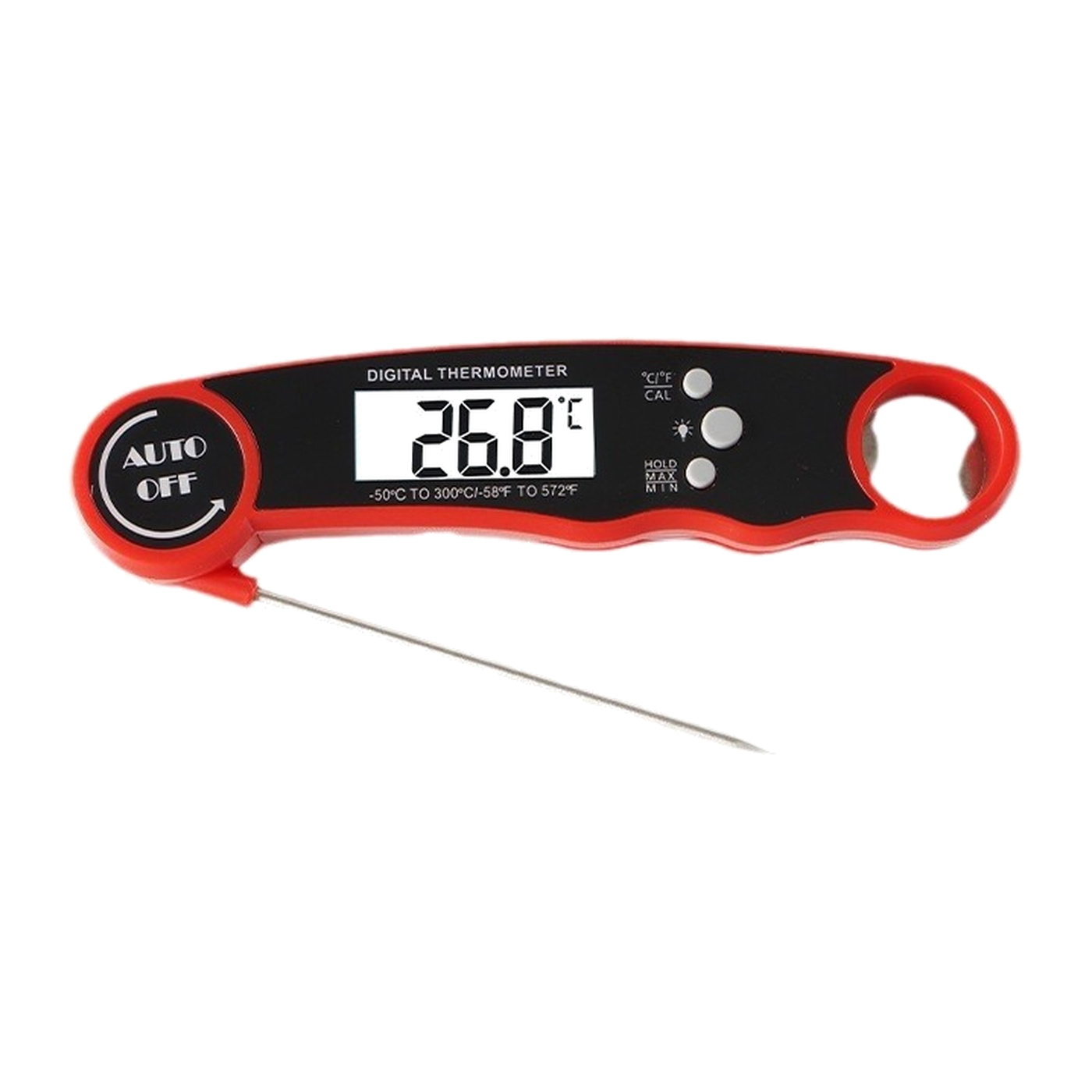
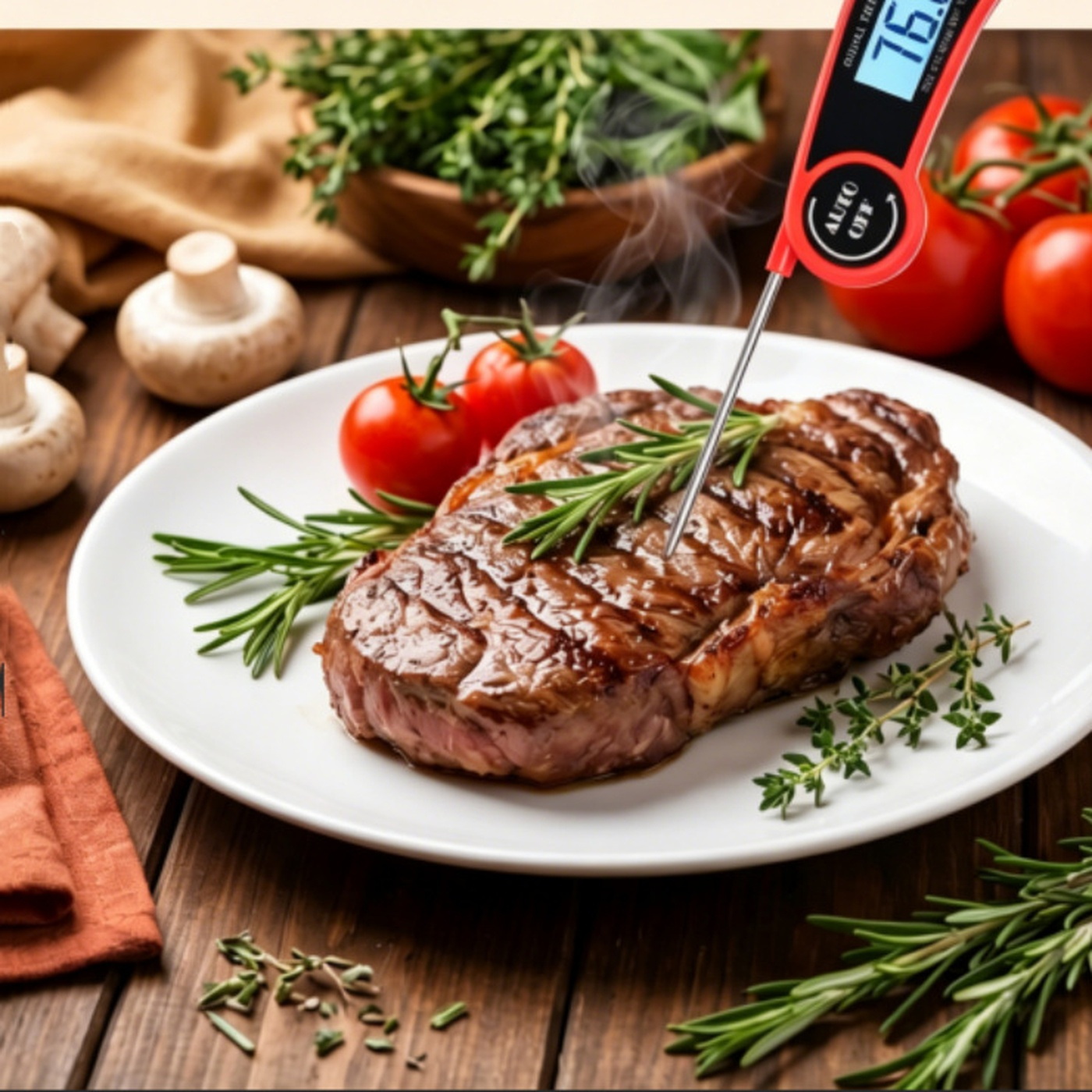
Use a thin tip, go in at a shallow angle toward the center, and wait ~2–3 seconds for a stable reading. Avoid the pan surface and any bones. On skin-on fish, probe the flesh side center.
Carryover is smaller than on a thick steak but still real on dense center-cut portions—pull near target and rest briefly off heat.
Grill, pan, and oven
On the grill, treat fish like other spot-checks: lid open, probe, lid closed—don’t leave the folder on the grate. In a pan, tilt the fillet gently if you need a cleaner angle. In the oven, check near the end so you are not opening the door every minute.
Technique basics match How to use a meat thermometer.
Care after seafood
Rinse the probe promptly—fish oils cling. Wipe the body, dry, and fold. Splash-care only; no dishwasher. A clean tip keeps the next steak check from tasting like last night’s salmon.
Home cooking guidance only—not food-safety certification or lab accreditation. Confirm final accuracy and care details on the product sample.
Keep reading