Basics
How to use a meat thermometer
Fold open, probe the thickest part, wait ~2–3s for a stable number, use Hold away from heat, then rest and recheck—plus an ice-bath self-check you can do at home.
Why a thermometer beats guesswork
Color, firmness, and “juices running clear” are unreliable cues. A digital instant-read meat thermometer tells you the internal temperature in the thickest part of the food so steaks, chicken, turkey, pork, and burgers land where you want them—safe when they need to be, juicy when preference allows.
Home cooks who probe once or twice per cook waste less food and argue less about doneness. Keep the unit on a fridge magnet or hang hole so the habit sticks.
Fold open and insert correctly
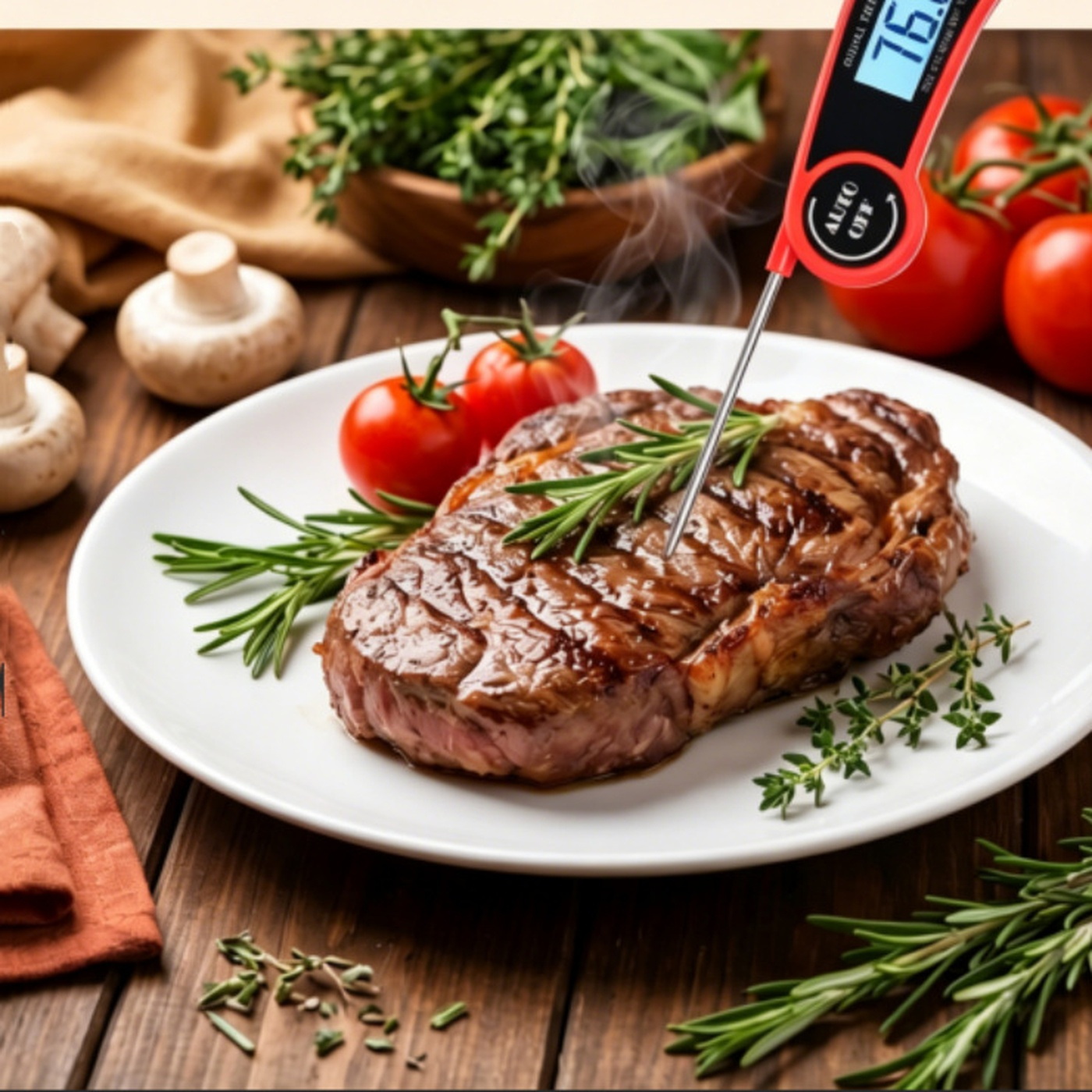
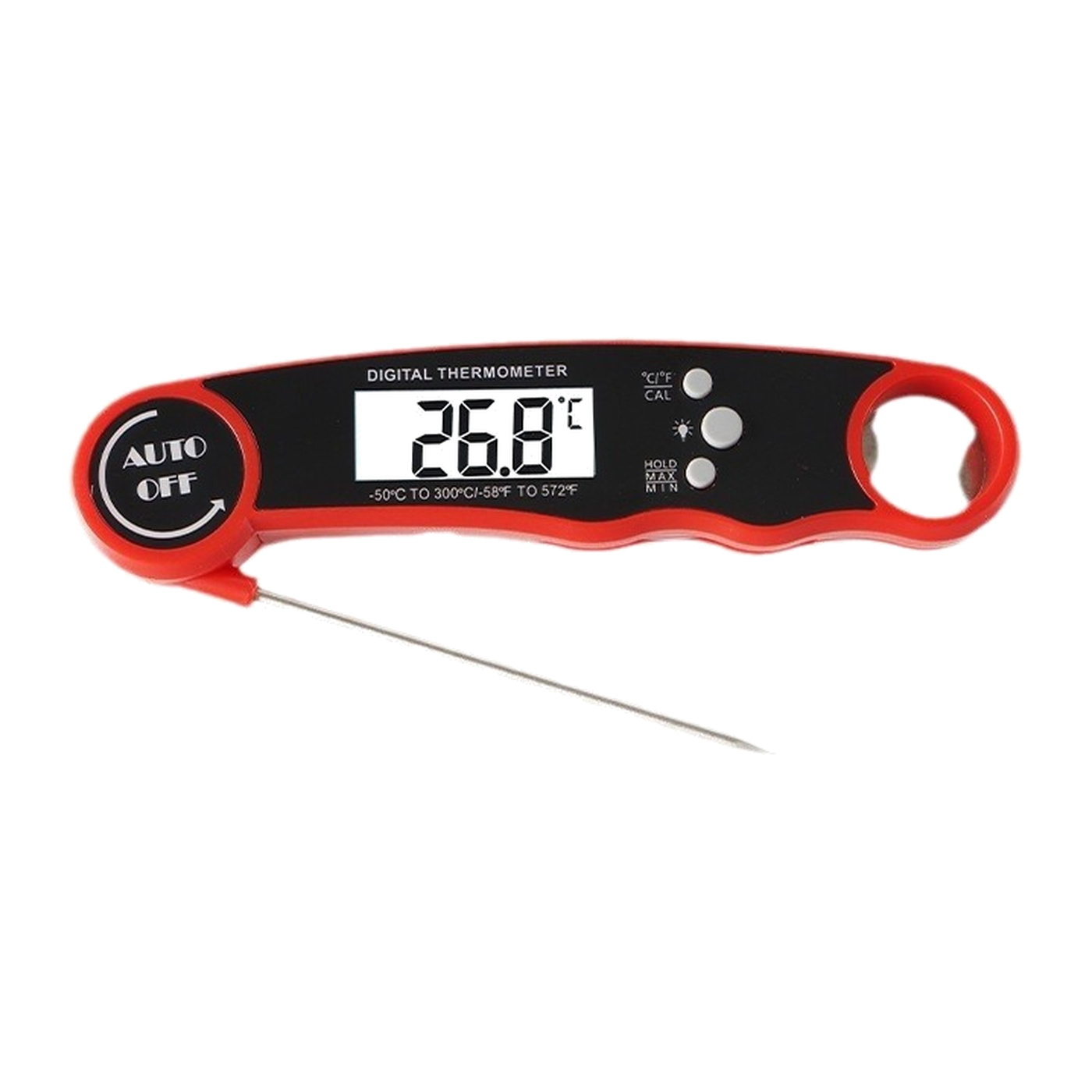
Open the probe fully before you use it. Insert the tip into the thickest part of the meat, avoiding bone, cartilage, and large fat pockets—those can fake a higher or lower reading.
For burgers and meatballs, go in from the side toward the center. For whole birds, check the breast and the innermost thigh. For steaks and chops, slide in from the side aiming at the geometric center. If a piece is uneven, check more than one spot.
Wait for a steady number—not the first flicker—so you hit the temp you actually want.
Wait for a stable reading (about 2–3 seconds)
Hold the probe still until the display settles—about 2–3 seconds on a capable instant-read. Do not chase the first flashing digit. “Instant” in marketing often means “fast,” not “zero wait.”
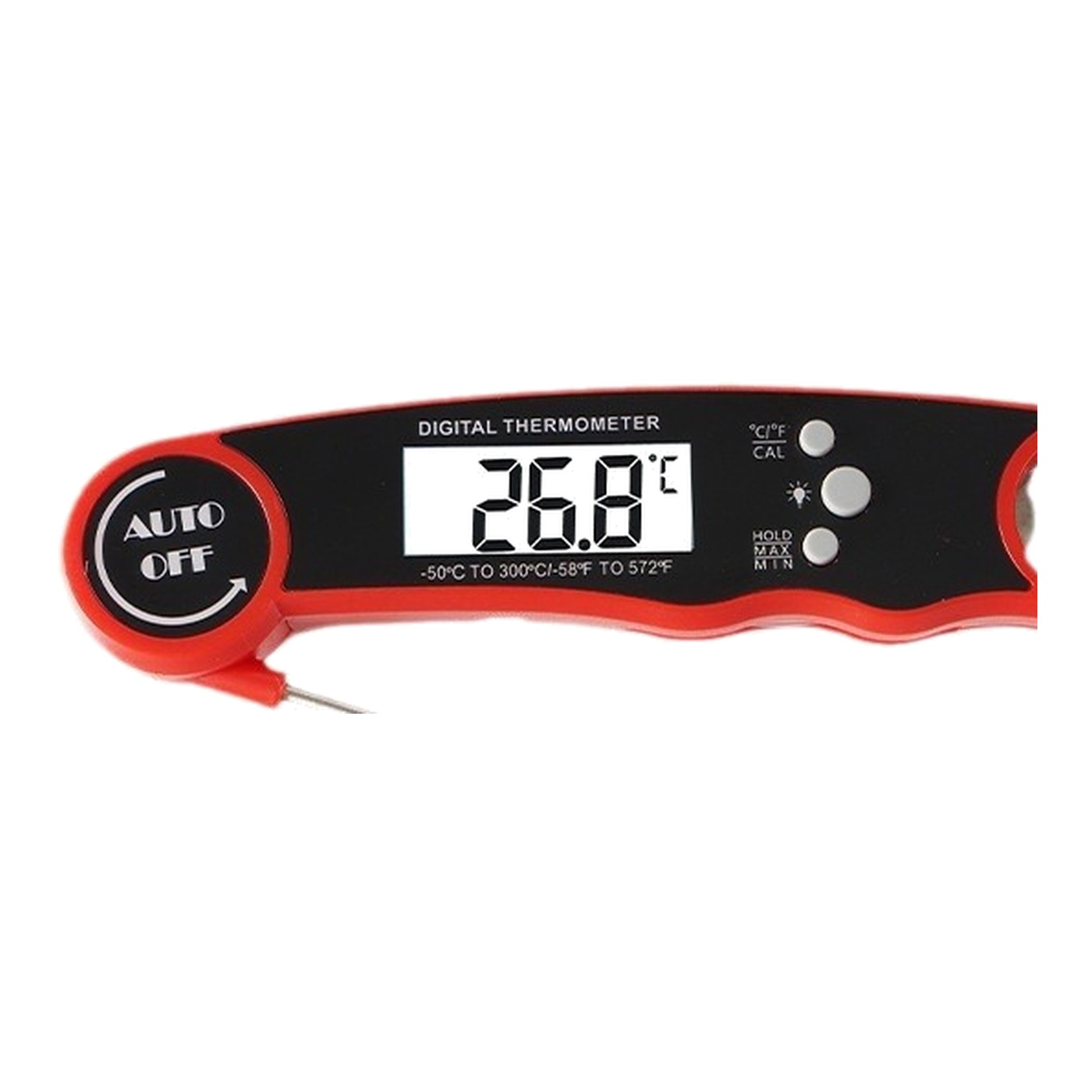
Use Hold if you need to pull the unit away from grill heat or steam to read the number comfortably. Auto-rotating backlit displays help left- or right-handed cooks on a dark patio.
Rest, carryover, and recheck
Carryover heat can raise temperature after you pull food from the grill or oven—especially thick steaks and roasts. Many cooks pull a few degrees early, rest briefly, then recheck if precision matters.
Keep a simple temp reference card nearby for steak, poultry, pork, and ground beef targets. Cross-link your cook with our steak, chicken, turkey, pork, and ground-beef guides when you want meat-specific detail.
Ice-bath and boiling-water self-check
For home confidence (not lab certification): pack crushed ice with a little water, insert the probe tip without touching the container walls, and wait for a steady reading near 32°F / 0°C. Use the unit’s calibration control if your model includes one.
At sea level, boiling water is near 212°F / 100°C—adjust for altitude. These checks build trust in the tool; they are not NSF/NIST claims.
Want the full walkthrough—ice bath, boiling water, altitude notes, and when to nudge CAL? Read the full calibration guide: How to calibrate a meat thermometer.
Care after each cook
Rinse the probe tip under running water, wipe the body with a soft damp cloth, and dry before folding. Do not soak overnight and do not dishwasher the electronics body.
Store with a protective sleeve if you toss the thermometer in a drawer or grill bag so the tip stays sharp and clean. Splash-resistant rinse is for kitchen splashes and a quick wash—not submersion. For a dedicated care page, see How to clean a meat thermometer.
Home cooking guidance only—not food-safety certification or lab accreditation. Confirm final accuracy and care details on the product sample.
Keep reading