Meat temps
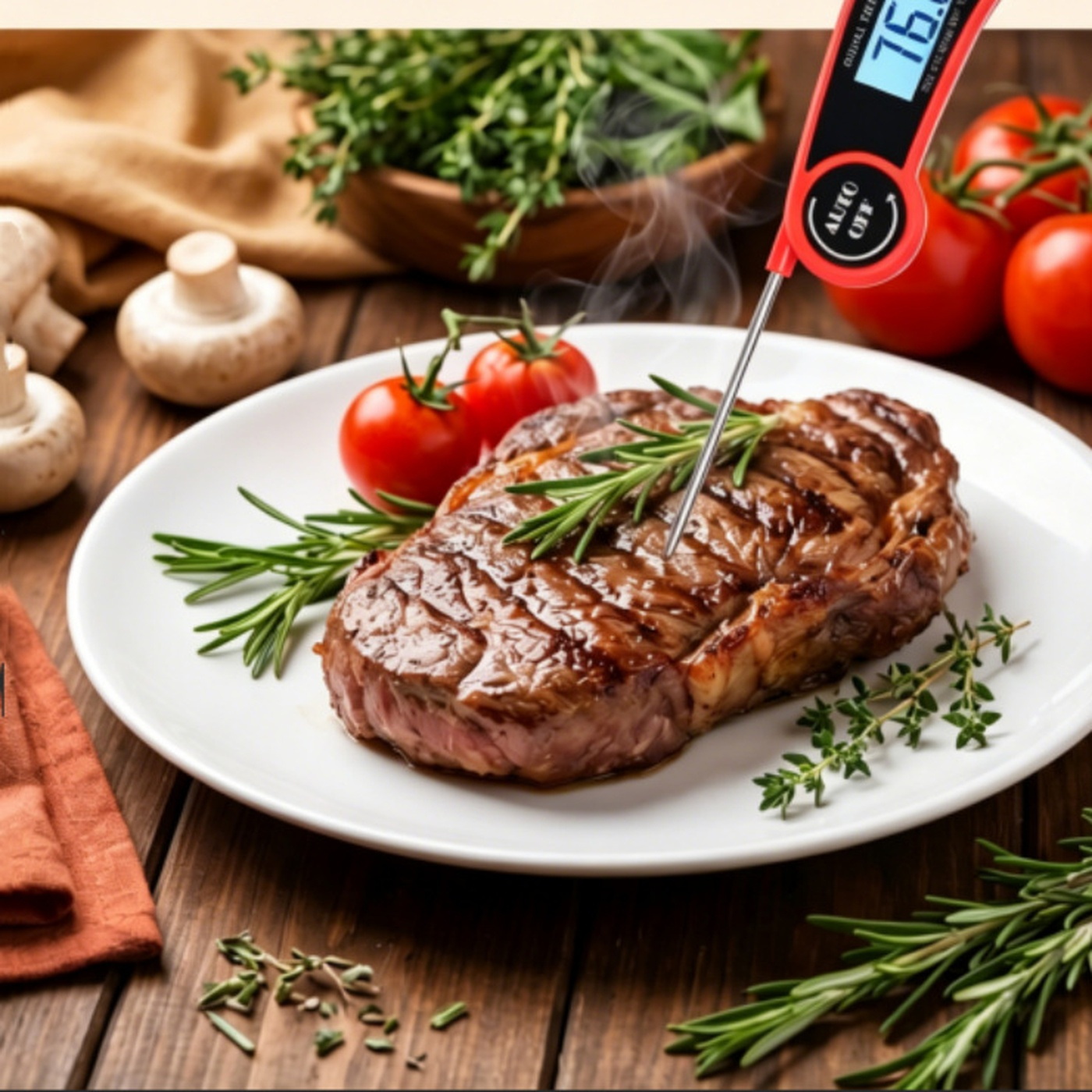
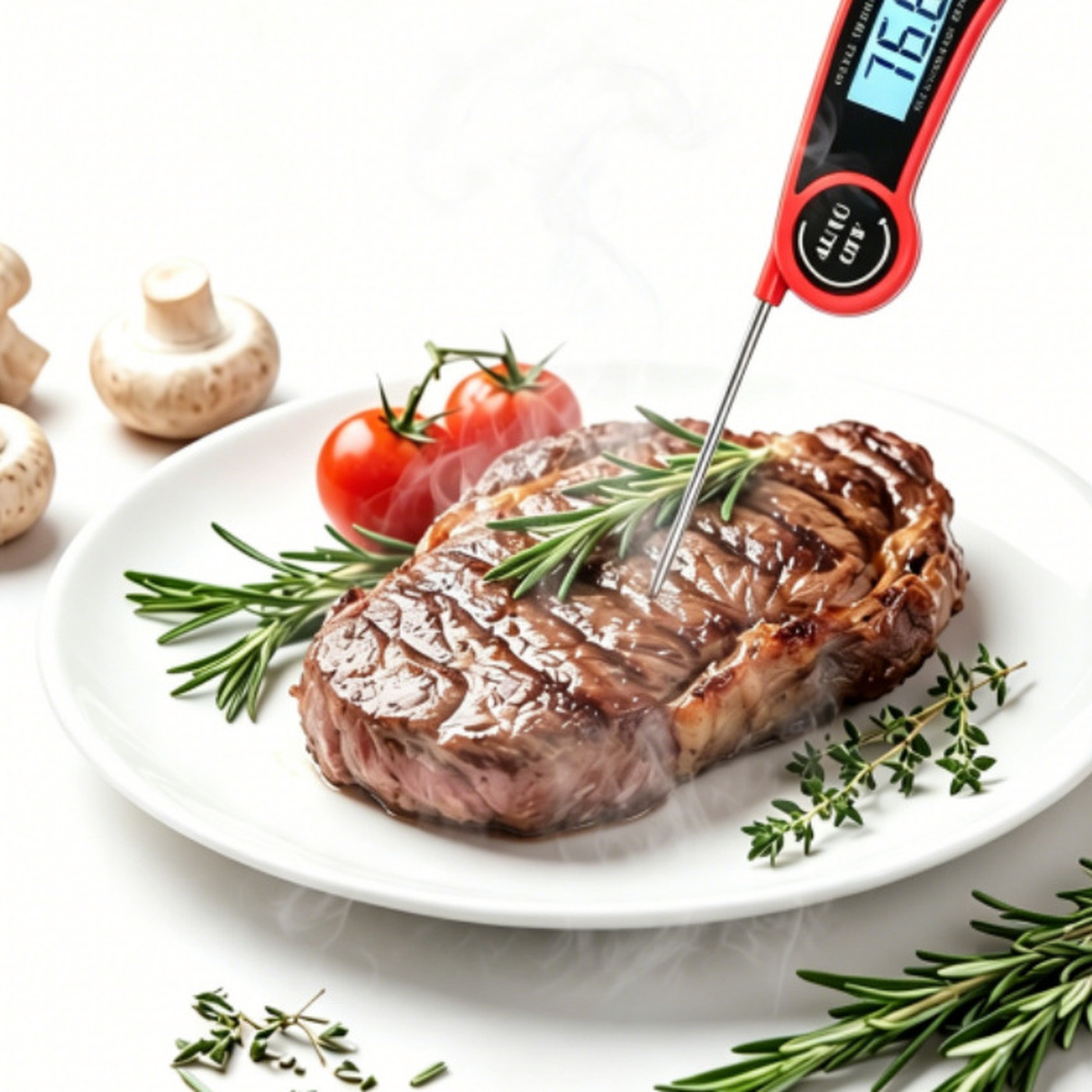
Meat thermometer for grilling: spot-check temps on the BBQ
Grill and BBQ habits for instant-read spot-checks—open the lid, probe the thickest part, wait for a stable number, and never leave the folder on the grate.
Why grillers need an instant-read
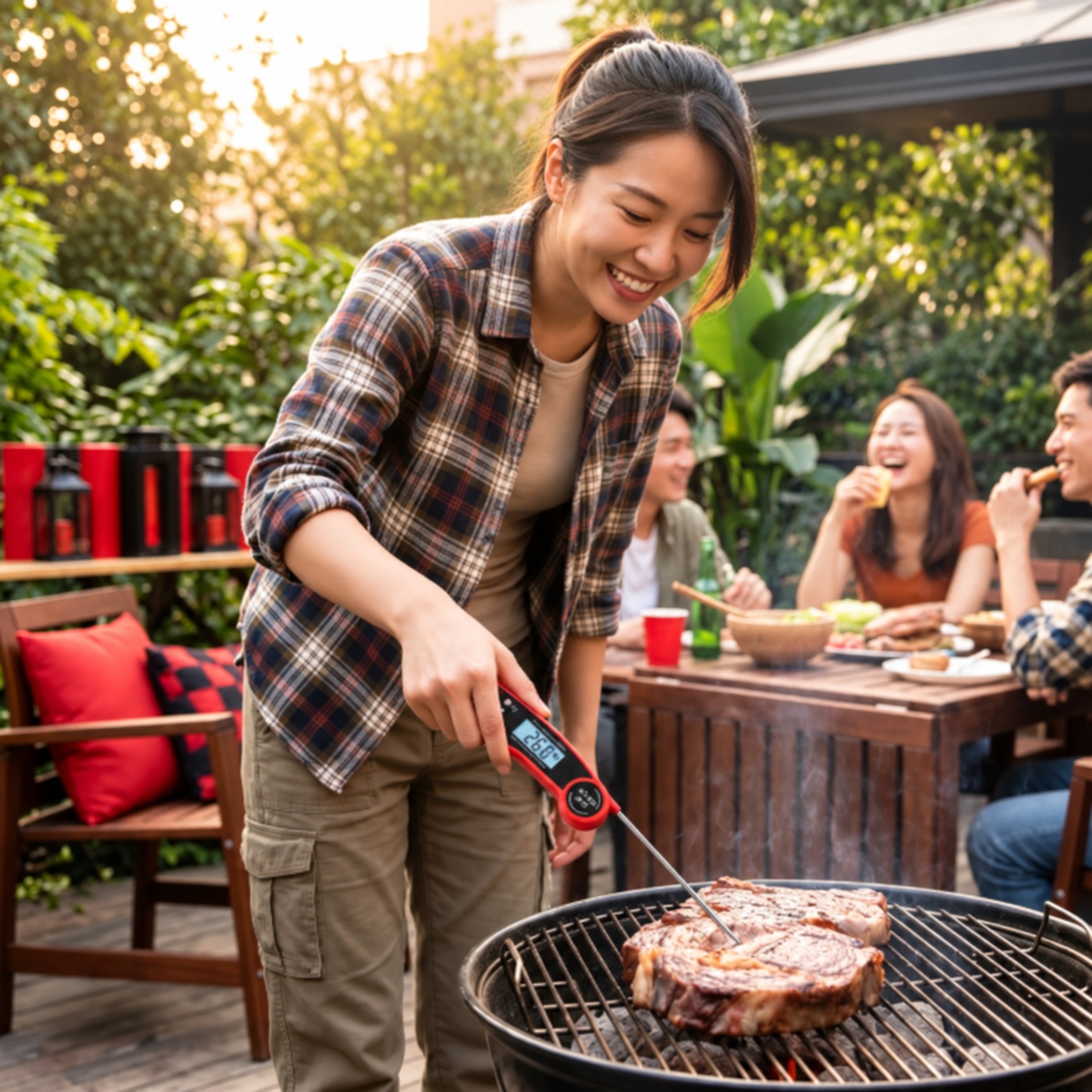
Color on the grill lies—smoke, char, and uneven fire make “looks done” a gamble. A digital instant-read meat thermometer for grilling lets you open the lid, probe the thickest part, wait for a stable reading, and close back up before you lose heat.
This is a BBQ spot-check habit, not a leave-in smoker probe workflow. FoldMark’s folder is built for quick checks, then out.
Spot-check rhythm on the BBQ
Open the lid, insert the tip into the center of the thickest piece (from the side on steaks and chops), hold still ~2–3 seconds until the number settles, read or tap Hold, then remove and close the lid.
Avoid bone and large fat pockets. Check the largest piece in a mixed batch—smaller ones may already be past done while the thick one lags.
Spot-check, then close the lid—don’t park a folder on hot grates.
Hold, backlight, and heat management
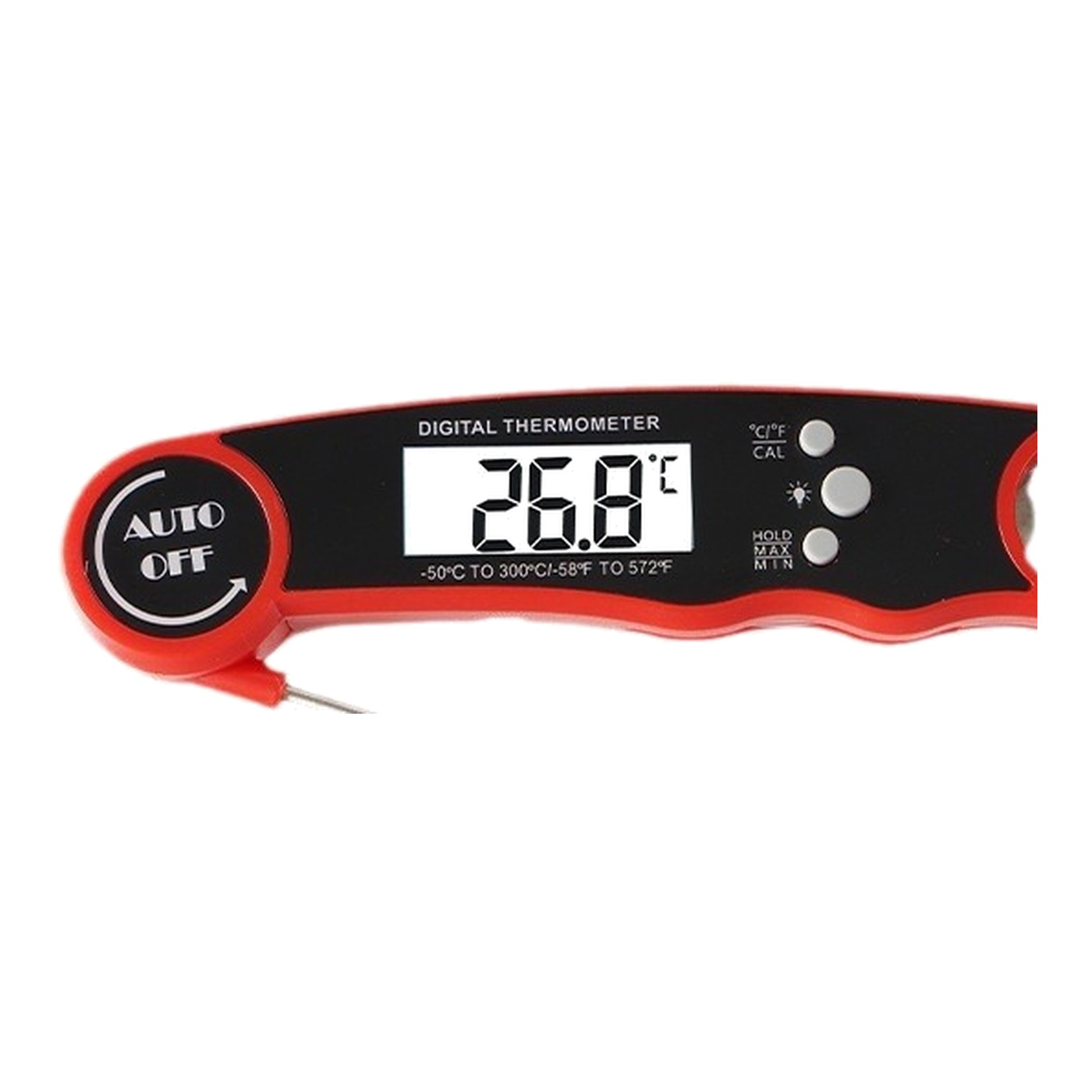
Grill heat and steam make screens hard to read over the fire. Use Hold so you can step back and read the locked number. A backlit display helps on evening cooks.
Never leave the thermometer body on hot grates or inside a closed grill for the cook. Instant-read means insert, read, remove—see instant-read vs leave-in if you are choosing tools for long smokes.
Steak, poultry, and pork on the grill
Steak: finish by preference (many cooks chase medium-rare around the mid-130s °F before rest)—details in the steak internal temp guide. Chicken: verify 165°F in the thickest part. Pork chops: modern whole-muscle targets often land near 145°F with a short rest.
Burgers need a safe center throughout—commonly ~160°F—because grinding mixes the surface through the patty.
Two-zone fires and uneven pieces
Sear over direct heat, then finish over indirect so you can probe without flare-ups kissing the probe tip. Thick bone-in pieces often need a second check near the end.
If one side of the grate runs hot, rotate pieces and recheck the coolest-looking thick cut before you declare the batch done.
After the cook
Rinse the probe tip, wipe the body, dry, and fold. Splash-care rinse is fine; do not soak or dishwasher the electronics. Park it on a magnet or hang hole so the next cookout starts with the tool in reach—not buried in a drawer.
Home cooking guidance only—not food-safety certification or lab accreditation. Confirm final accuracy and care details on the product sample.
Keep reading