Basics
A foldable thermometer habit for busy weeknights
When dinner is on a clock, a fold-open instant-read check keeps weeknight proteins from guesswork. Probe, wait a few seconds, rest, then recheck.
Why weeknights reward a quick temp check
After work, most home cooks finish chicken, chops, or a skillet steak by look and feel. That works until a thick piece stays pink in the center while the edges dry out—or until leftover chicken feels uncertain the next day.
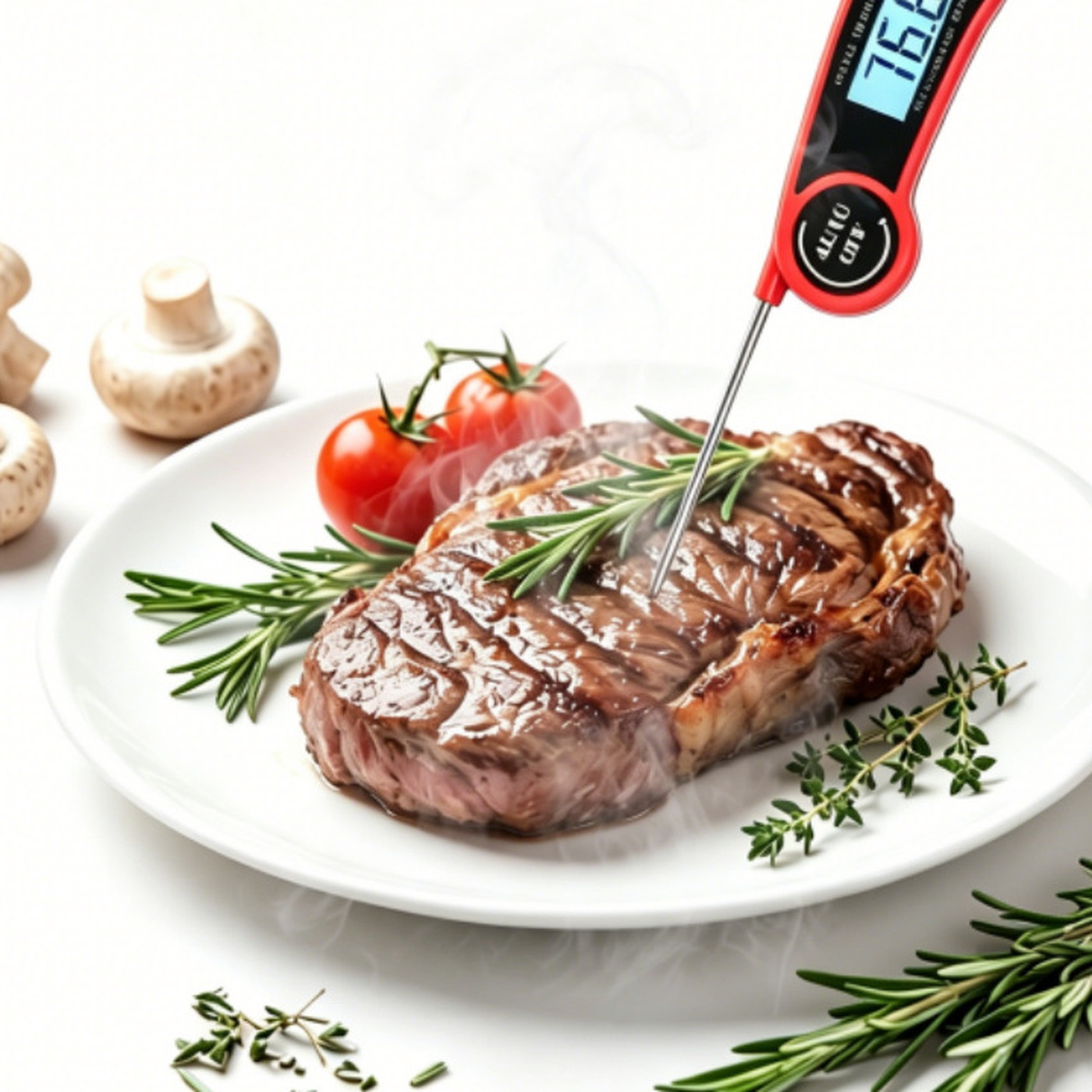
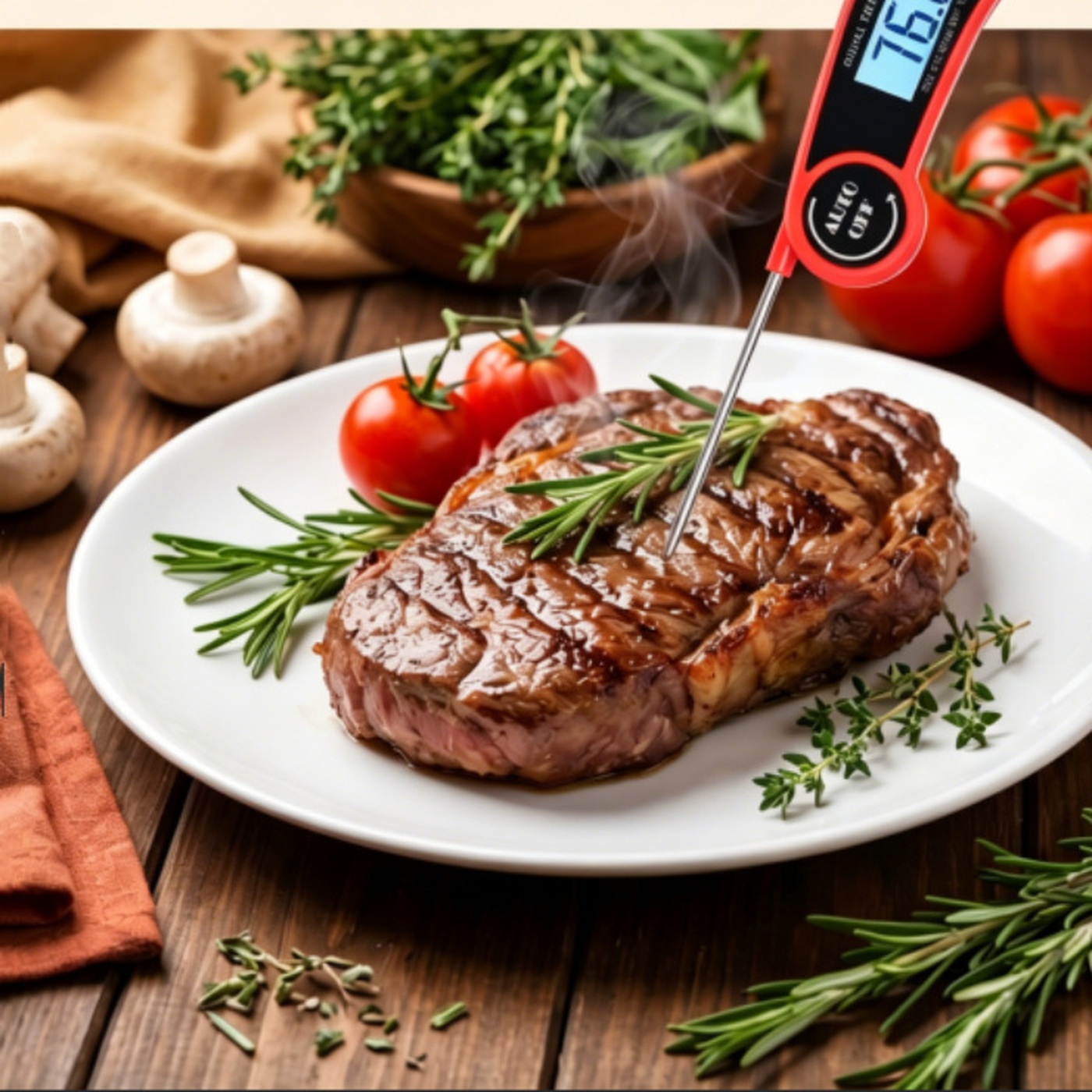
An instant-read meat thermometer turns the last minutes of cooking into a number you can trust. You fold the probe open, check the thickest part, wait about 2–3 seconds for a stable reading, then decide whether to pull, rest, or give it another minute. Technique details live in How to use a meat thermometer.
A fold-open routine that fits a busy stove
Keep the thermometer where you can reach it with one hand—drawer edge, magnetic strip, or the sleeve that came with the unit. When the protein looks close:
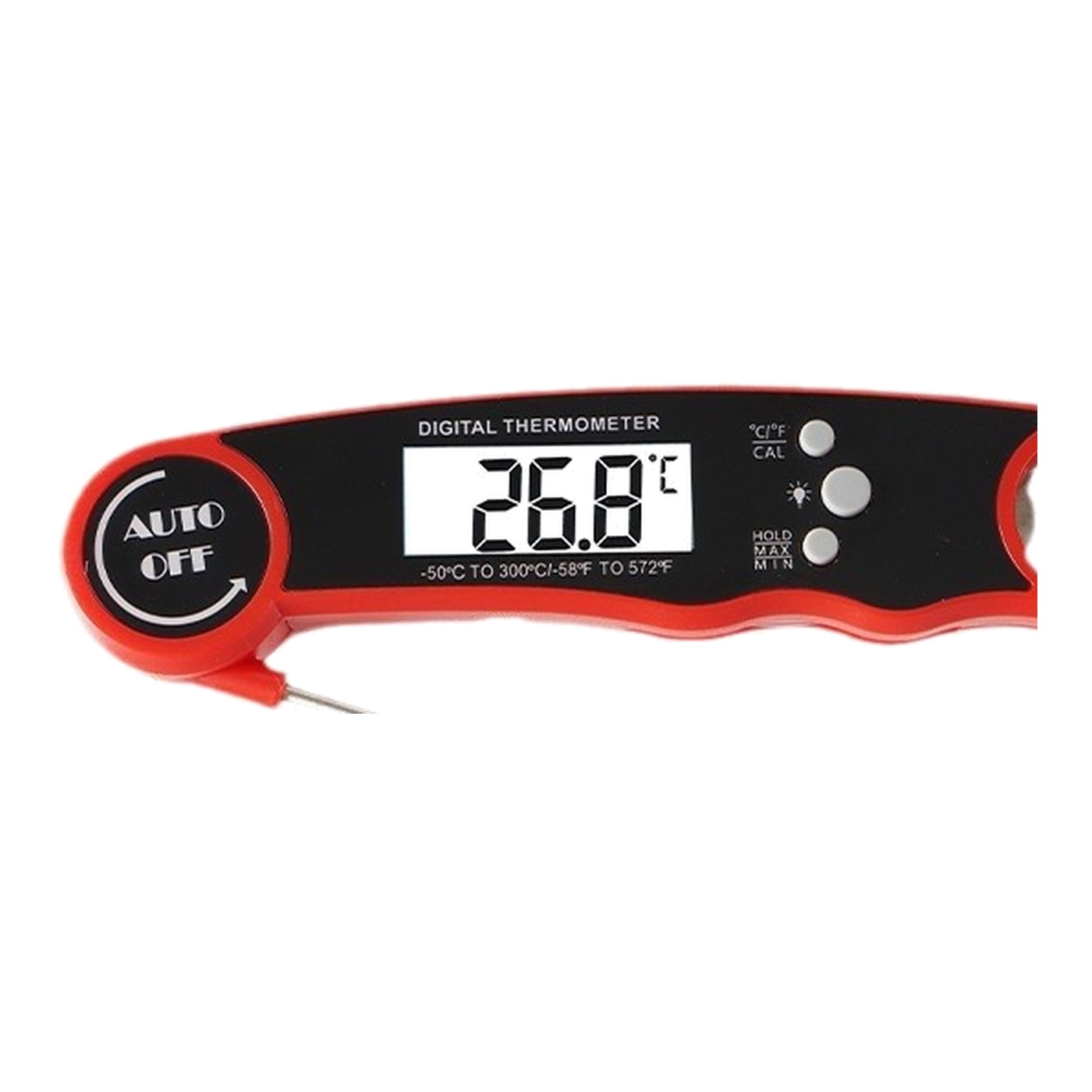
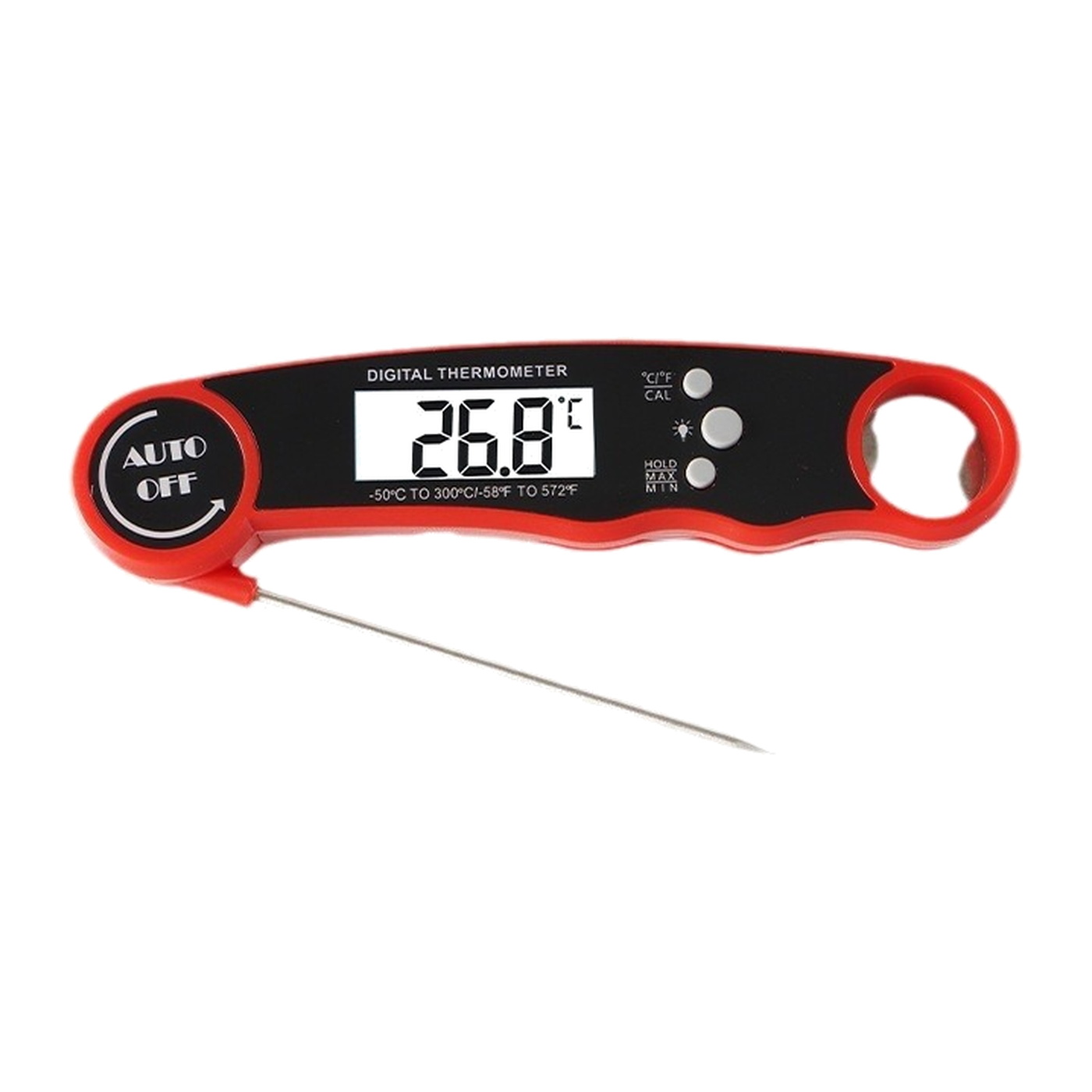
1. Fold the probe open so the tip is clear of the body. 2. Insert into the thickest part, avoiding bone and the pan surface. 3. Hold still until the display settles (~2–3 seconds on a typical instant-read). 4. Use Hold if you need to read away from steam or heat. 5. Fold closed after a rinse of the probe tip.
The foldable form factor matters on weeknights because it lives in a drawer without a dangling cable, and it opens only when you need a spot check—not as a leave-in oven probe. Compare styles in Instant-read vs leave-in.
Open the probe when the pan is almost done—not after you have already plated. A three-second check beats cutting to peek.
Targets you will actually use on a Tuesday
Home kitchens lean on a few recurring proteins. Use these as starting points, then confirm with your own guidance and local food-safety rules:
- Chicken pieces: see Chicken internal temperature for thickest-part checks and rest timing. - Steak: Steak internal temp covers doneness bands and carryover. - Pork chops: Pork chop internal temp for center readings without drying the edge. - Ground beef: Ground beef temperature when you are packing burgers or meatballs.
Pull near the target, rest off heat, then recheck once if the piece is thick. Carryover still moves the number after you leave the pan.
Clean fast so the habit sticks
A sticky probe is why thermometers get abandoned in a junk drawer. After the plate goes down: rinse the metal tip, wipe the body dry, fold closed, and put it back. Splash-care only—do not soak overnight or run the electronics through a dishwasher. More care steps: How to clean a meat thermometer.
If readings drift, an ice-bath self-check takes a minute—see Calibrate a meat thermometer.
This is home cooking guidance, not lab certification. When in doubt on poultry or ground meat, prefer the higher end of trusted food-safety ranges and recheck the thickest part.
Home cooking guidance only—not food-safety certification or lab accreditation. Follow the product’s care instructions and check accuracy with an ice bath.
Also listed on

Keep reading